


On September 23, 2025, a landslide-dammed lake located in the upper reaches of Mataian River in Hualien County experienced two episodes of overtopping after Typhoon Ragasa brought torrential rainfall to eastern Taiwan.
The resulting floodwaters—estimated to be equivalent to the volume of 6,000 Olympic-sized swimming pools—surged downstream, carrying large amounts of sediment. The sediment-laden flood destroyed the Mataian River Bridge and spread into the urban areas of Guangfu Township, causing severe local damage.
To understand how this disaster occurred, it is essential to begin with the landslide-dammed lake itself.
What Is a Landslide-Dammed Lake?
A landslide-dammed lake forms when a river channel is blocked by landslides, debris flows, or earthquakes, causing water to accumulate upstream and create a natural lake. The dams of such lakes are typically composed of loosely packed soil and rock, lacking stable structural integrity. During heavy rainfall, they are prone to overtopping or sudden failure, which can release large volumes of water in a short period of time and pose serious threats to downstream communities.
How Did the Mataian River Landslide-Dammed Lake Form?
The Mataian River landslide-dammed lake originated on July 21, following intense rainfall brought by a previous typhoon. Continuous heavy rain in the upper reaches of the creek triggered large-scale slope failures, causing vast amounts of soil and rock to collapse into and block the river channel.
This resulted in the formation of a massive natural dam, approximately 200 meters high, with a maximum storage capacity of about 91 million cubic meters of water. Such high-risk hazards are common in Taiwan’s mountainous terrain.
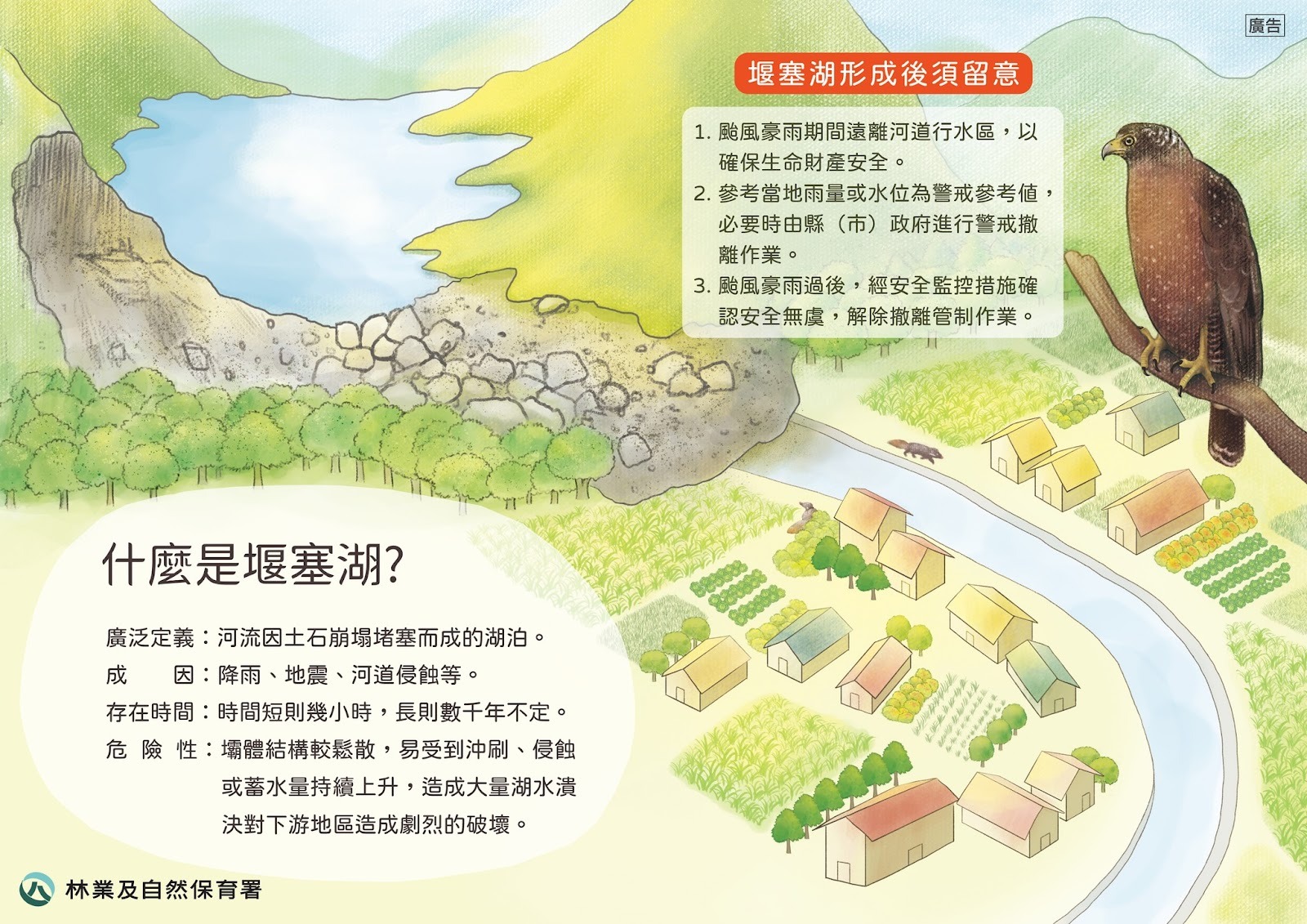
Image source: Forestry and Nature Conservation Agency
Hidden Risks of Landslide-Dammed Lakes
Because the dams of landslide-dammed lakes are inherently unstable, overtopping or collapse can release enormous volumes of floodwater and debris flows, severely endangering downstream areas. As climate change intensifies extreme rainfall events, the flooding in Guangfu Township stands as a stark example of how consecutive typhoons can amplify disaster impacts.
When a landslide-dammed lake is identified as a safety concern, it is crucial not only to stay informed through news and disaster prevention updates, but also to follow avoidance guidelines and keep away from hazardous areas.
If warnings are issued, the following measures are recommended to protect personal and family safety:
– Prepare and carry an emergency evacuation kit, including clothing, important documents, and medical supplies.
– Follow evacuation instructions from local governments or emergency response units and relocate to designated shelters.
– Inform family and friends of the shelter to which you have evacuated.
– Remain at the shelter until the warning is officially lifted.
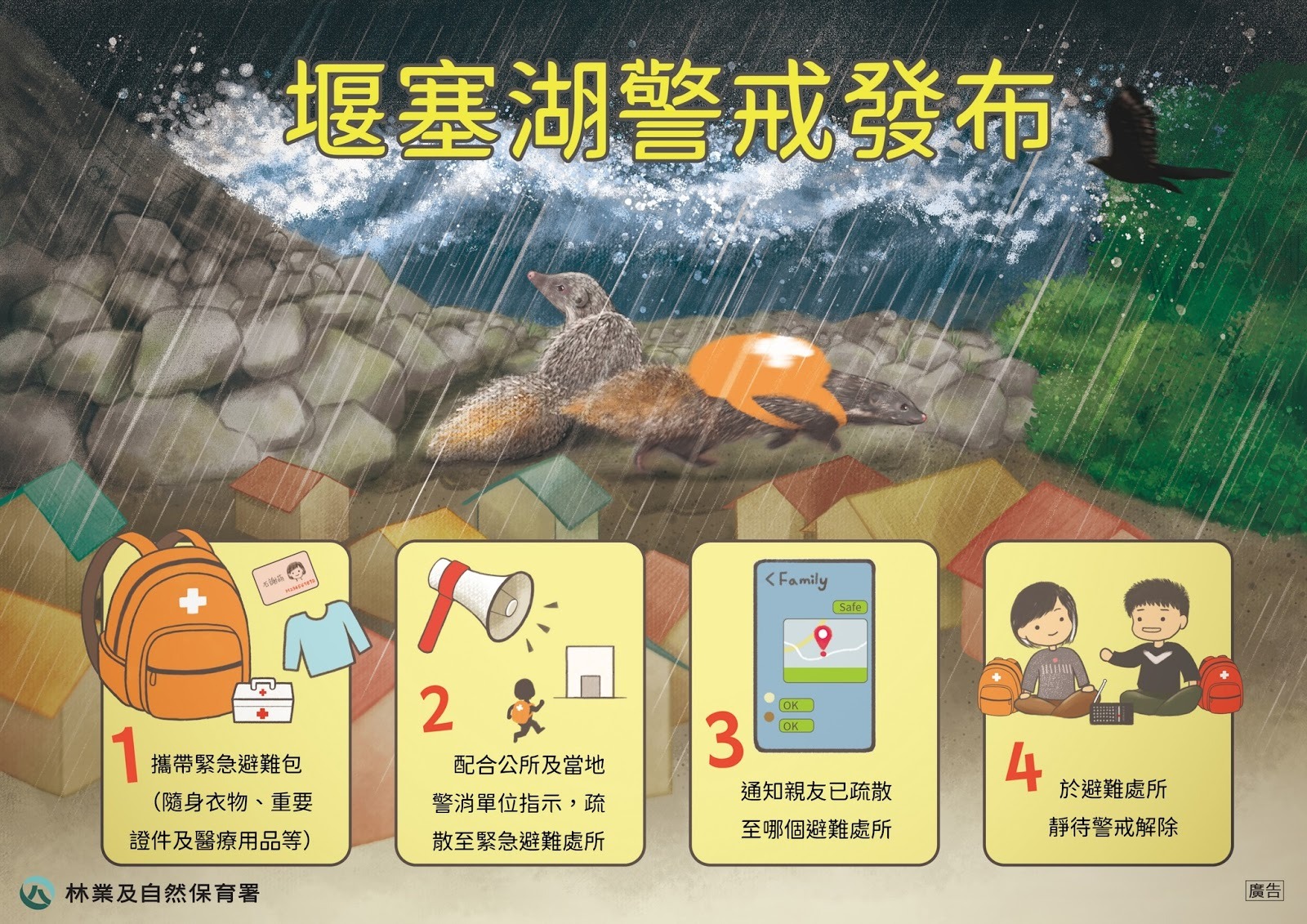
Image source: Forestry and Nature Conservation Agency
Everyday Actions for Disaster Preparedness and Sustainable Living
In the face of ongoing climate crises and increasingly frequent extreme rainfall, disaster preparedness must go hand in hand with changes in everyday life:
– Stay informed about weather conditions
Download the Central Weather Administration app or use other official platforms to monitor rainfall and river water levels during typhoon seasons. Prepare evacuation kits in advance and comply with mandatory evacuation notices.
– Participate in or support environmental conservation efforts
Join tree-planting or mountain clean-up activities and support the restoration of hillside forests to reduce the risk of upstream landslides.
– Practice low-carbon living to ease climate pressures
Reduce plastic use, choose public transportation, and adopt other low-carbon daily actions to address the root causes of climate change.
The Guangfu Township flooding was not merely a single disaster event, but a profound warning. It reminds us that in an era of climate change, environmental conservation and everyday lifestyle choices are inseparably linked—and both play a critical role in safeguarding our future.